
Shipping Container Guide
A place for your tools. Space for a vehicle. The right conditions for your goods. Find the checks that matter before you choose a container.
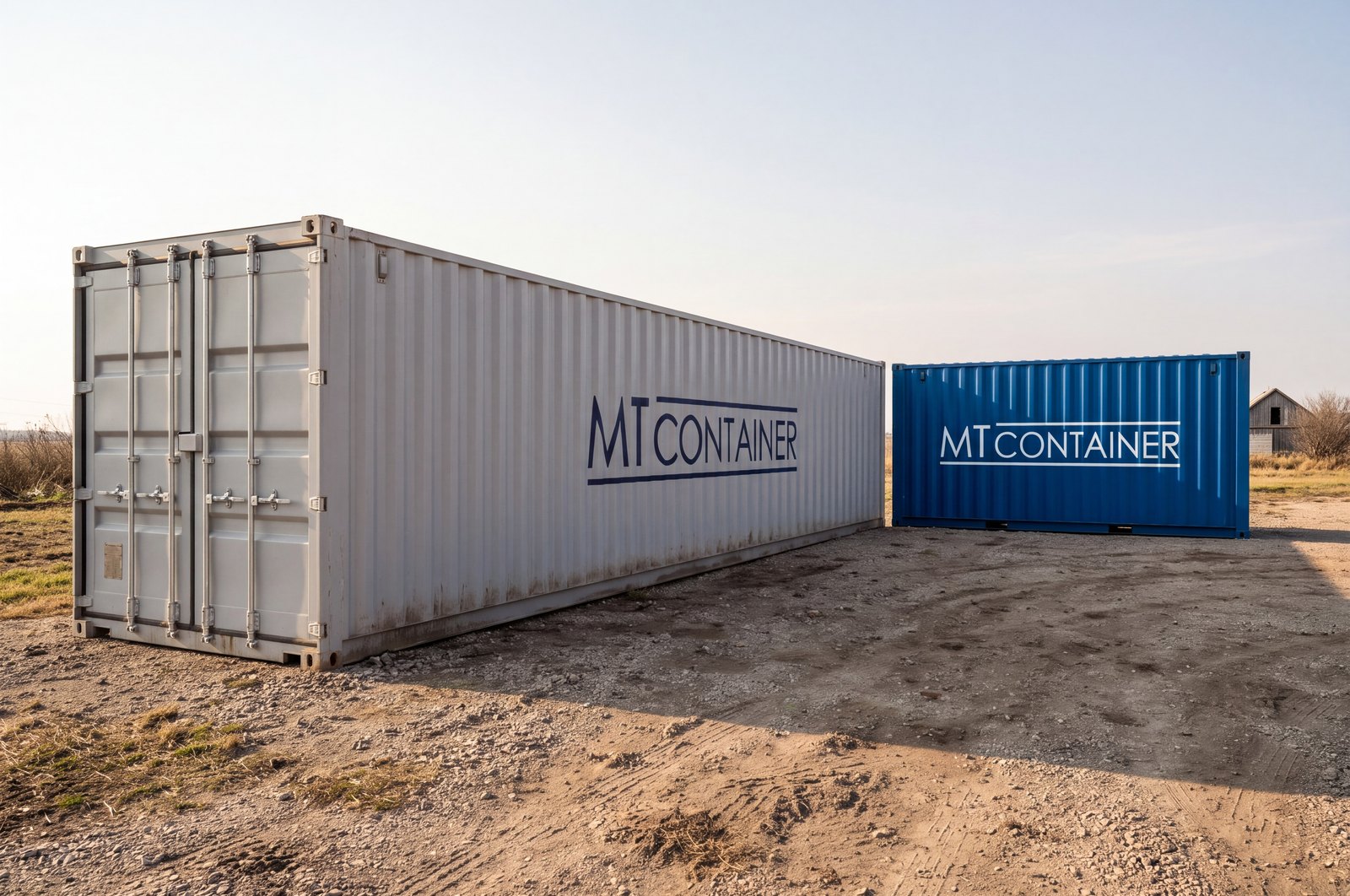
Start with the job your container needs to do
Use this shipping container guide to plan storage, vehicle access or refrigerated space. List what goes inside, how you will reach it and where the container will sit. Then check the unit and the site.
Projects helps you plan how you will use the container. The Owner’s Handbook starts with condition and delivery checks. Sizes and Container Types helps you compare space and equipment. The examples from MT describe work in Germany. Container Basics keeps four questions separate: space, condition, transport documents and site.
Projects: plan the use before choosing the box
A garage needs room for you to drive in, park and get out. A shed needs a layout that lets you reach what you have stored. Start with the routine you expect to repeat.
- Shipping Container Garages: Check how the vehicle gets in, whether there is room to open its doors and how you get out after parking.
- Shipping Container Sheds: Compare a container with a conventional shed and plan a clear route to your stored tools and equipment.
For homes, cabins, pools or occupied workspaces, discuss the intended use, local permit and zoning rules, site requirements and alterations with qualified local professionals before you order. MT supplies the container; a finished building or pool needs its own project team.
Owner’s Handbook: check condition and delivery
What do container condition grades mean?
- New / one trip: generally a unit sold after its first ocean voyage. Ask for photos of the individual unit.
- Cargo worthy: a used-container category associated with suitability for a CSC survey. CSC stands for the International Convention for Safe Containers; the survey is a safety inspection for cargo transport. Ask which inspection and documents support the description for your shipment.
- Wind and water tight: describes a container that keeps the weather out for storage; the label alone does not confirm acceptance for international shipping.
- As is: sold in its current state, potentially with holes, floor damage or other repair needs. Find out which defects exist and get the terms in writing before you buy.
These are trade descriptions, not a condition promised for every MT container. For US orders, the grade of the individual unit is stated in writing. Seller guidance and the CSC reference were checked on November 26, 2026; sources are listed below.
What should I check before delivery?
For US orders, arrange pickup or delivery by container truck. Confirm the unloading method for your location with our team, then work through this checklist:
- Approach: send the delivery ZIP code, photos of the entrance, gate measurements and details of the turning space.
- Overhead: identify wires, branches and other obstructions along the route and at the unloading spot.
- Placement: agree on the door orientation, the unloading space and who provides the unloading equipment.
- Ground: arrange firm, level ground and have support and drainage assessed for the intended load and use.
Have the hauler confirm the clearances for the actual vehicle and unloading method. A container’s footprint does not tell you how much space the truck needs.
Not sure whether to buy? Compare the leasing options first.
- Container Leasing: Compare one-way leasing for a move from A to B, long-term leasing and a purchase option.
Sizes and Container Types: compare the usable space
Which size should I start with?
Start with your longest item and the floor area you need, then add room to walk in and reach things. Choose a high cube when height, not floor space, is the limit. By floor area, the 20 ft example is about twice the 10 ft, and the 40 ft about twice the 20 ft. Use these dry (non-refrigerated) container examples for orientation. Inside length and floor area do not include the space needed outside for delivery and open doors. Actual units vary; ask for the clear door opening and usable dimensions of the unit you are offered.
| Container | Inside | Floor area | Door opening | Outside |
|---|---|---|---|---|
| 10 ft | 9 ft 3.5 in (2,831 mm) × 7 ft 8.5 in (2,350 mm) × 7 ft 10.1 in (2,390 mm) | about 71.6 sq ft (6.65 m²) | 7 ft 8.2 in (2,342 mm) × 7 ft 5.8 in (2,280 mm) | 9 ft 9.8 in (2,991 mm) × 8 ft 0.0 in (2,438 mm) × 8 ft 6.0 in (2,591 mm) |
| 20 ft | 19 ft 4.1 in (5,895 mm) × 7 ft 8.5 in (2,350 mm) × 7 ft 10.2 in (2,392 mm) | about 149.1 sq ft (13.85 m²) | 7 ft 8.1 in (2,340 mm) × 7 ft 6.2 in (2,292 mm) | 19 ft 10.5 in (6,058 mm) × 8 ft 0.0 in (2,438 mm) × 8 ft 6.0 in (2,591 mm) |
| 20 ft High Cube | 19 ft 4.2 in (5,898 mm) × 7 ft 8.6 in (2,352 mm) × 8 ft 10.2 in (2,698 mm) | about 149.3 sq ft (13.87 m²) | 7 ft 8.1 in (2,340 mm) × 8 ft 5.8 in (2,585 mm) | 19 ft 10.5 in (6,058 mm) × 8 ft 0.0 in (2,438 mm) × 9 ft 6.0 in (2,896 mm) |
| 40 ft | 39 ft 5.7 in (12,032 mm) × 7 ft 8.6 in (2,352 mm) × 7 ft 10.3 in (2,395 mm) | about 304.6 sq ft (28.30 m²) | 7 ft 8.1 in (2,340 mm) × 7 ft 6.2 in (2,292 mm) | 40 ft 0.0 in (12,192 mm) × 8 ft 0.0 in (2,438 mm) × 8 ft 6.0 in (2,591 mm) |
| 40 ft High Cube | 39 ft 5.7 in (12,032 mm) × 7 ft 8.5 in (2,350 mm) × 8 ft 10.3 in (2,700 mm) | about 304.4 sq ft (28.28 m²) | 7 ft 8.1 in (2,340 mm) × 8 ft 6.2 in (2,597 mm) | 40 ft 0.0 in (12,192 mm) × 8 ft 0.0 in (2,438 mm) × 9 ft 6.0 in (2,896 mm) |
Dimension groups read length × width × height; door openings read width × height.
A high cube is taller: in these 40 ft references it adds 12.0 in (305 mm) of inside height.
By our calculation from the inside dimensions (length × width × height), the examples hold about 560 cu ft (15.9 m³) for 10 ft, 1,170 cu ft (33.1 m³) for 20 ft, 1,320 cu ft (37.4 m³) for 20 ft High Cube, 2,390 cu ft (67.8 m³) for 40 ft and 2,700 cu ft (76.3 m³) for 40 ft High Cube. This is the geometric inside volume, not a published cargo capacity.
The door opening is lower and slightly narrower than the inside: the 20 ft reference lists a door of 7 ft 8.1 in (2,340 mm) wide by 7 ft 6.2 in (2,292 mm) high, against an inside of 7 ft 8.5 in (2,350 mm) wide by 7 ft 10.2 in (2,392 mm) high. Check the door opening of the offered unit separately. The 40 ft High Cube example shows slightly less floor area than the 40 ft example, and the 20 ft High Cube slightly more than the 20 ft. Both differences come from the widths in the source tables, not from the height.
Each row combines reference figures from published data sheets; it is not the specification of one unit. Sources and comparison values are listed at the end of this page. Match the interior and doorway on the actual unit before ordering.
How much does an empty container weigh?
Tare is the weight of the empty container. Maximum gross weight includes the container and its cargo; it is not the cargo allowance. These data-sheet examples are reference values, not a rating for an offered unit.
| Container | Tare | Maximum gross |
|---|---|---|
| 10 ft | 2,870 lb (1,300 kg) | 22,400 lb (10,160 kg) |
| 20 ft | 4,700 lb (2,130 kg) | 67,200 lb (30,480 kg) |
| 20 ft High Cube | 4,630–4,740 lb (2,100–2,150 kg) | 67,200 lb (30,480 kg) |
| 40 ft | 8,270 lb (3,750 kg) | 71,650 lb (32,500 kg) |
| 40 ft High Cube | 8,600 lb (3,900 kg) | 71,650 lb (32,500 kg) |
Weight sources: SCF for 10 ft and 20 ft, BULLBOX for 20 ft High Cube, and Hapag-Lloyd for 40 ft and 40 ft High Cube. The 20 ft weight example is separate from the TIS interior reference above. The BULLBOX design tare is a range. Confirm the actual tare and maximum gross weight on the unit’s markings and data sheet before planning a load.
Payload is maximum gross weight minus tare. For the 40 ft example, Hapag-Lloyd lists a maximum payload of 63,380 lb (28,750 kg). Ask the hauler what weight can travel on your route.
- 10 ft Container Page: Check dimensions, weight and what fits inside.
- Container Sizes and Dimensions: Compare container measurements across sizes. That page uses a different 20 ft reference unit, so its inside dimensions differ from the example above by a few millimeters.
- Reefer Container Guide: Read the practical guide for buyers and users of refrigerated containers.
- Reefer Containers for Sale: See reefer listings from Hamburg; US orders are sourced separately.
- Used Reefer Containers: See used reefer listings from Hamburg.
- Platform Containers: Read about platform containers: a deck with no end walls, no side walls and no roof.
- Flat Rack Containers: Explore dimensions, types and loading questions.
For US customers, new (one trip) and used dry containers in 10 ft, 20 ft and 40 ft sizes, including 20 ft and 40 ft high cubes, are sourced through our US partner network, subject to availability. Double-door containers open at both ends; open-side containers also open along one long side. Both versions can be requested. Open top, tank, pallet wide and 45 ft containers can be requested for purchase or leasing through the same network, subject to availability. Quotes are in USD.
The reefer shop listings show Hamburg units in EUR; US orders are sourced separately through our US partner network, subject to availability, with quotes in USD.
Stories from MT: storage and technical projects in Germany
MT has traded containers from Hamburg, Germany, since 2008. Starting in 2024, one 10 ft and three 20 ft containers served as lockable storage for tools and materials on a construction site in Hamburg.
For a heating plant in southern Germany, MT supplied two 40 ft containers. A local heating contractor carried out the technical installation work. MT’s part was supplying the containers, not the installation.
Container Basics: keep the questions separate
Space: compare the usable interior and doorway with the items you need to move. Condition: inspect the offered unit and agree on its condition in writing. Transport documents: ask what is required for the intended shipment. Site: check access, support and permission for the intended use. Answering one question does not settle the others.
Ask about a container for your project
Send us your intended use, preferred size or type, quantity, delivery ZIP code and access details. For US customers, standard dry and reefer containers are sourced through our US partner network, subject to availability, with pickup or delivery in the US and quotes in USD. Our team responds in English.
Sources and reference limits
Reference dimensions come from the technical sources below, checked on November 26, 2026. Measurements describe reference equipment, not an offered unit. Our own conversions use 25.4 mm per inch, 10.7639 sq ft per m², 35.3147 cu ft per m³ and 2.20462 lb per kg; inches and square feet are rounded to one decimal place, square meters to two, cubic meters to one, and pounds and cubic feet to the nearest 10.
Sources for the comparison: SCF supplies the outside dimensions of the 10 ft, 20 ft, 40 ft and 40 ft High Cube rows and the 10 ft interior; TIS supplies the 20 ft interior and doorway; Hapag-Lloyd supplies the 40 ft interiors and doorways. The 10 ft door opening comes from a separate BULLBOX manufacturer specification linked below; it is not a specification for the SCF unit. Each row is a set of reference figures, not the specification of one unit. Match the interior and doorway on the actual unit before ordering.
The 20 ft High Cube row uses the BULLBOX 20 ft High Cube manufacturer data sheet for its inside, doorway and outside dimensions. Its floor area is calculated from that interior.
For comparison, the BULLBOX manufacturer specifications list a 40 ft doorway of 7 ft 8.2 in (2,343 mm) by 7 ft 5.8 in (2,280 mm), and a 40 ft High Cube doorway of 7 ft 8.2 in (2,343 mm) by 8 ft 5.8 in (2,585 mm). Door openings differ between manufacturers. Floor areas and US measurements are our calculations from the metric reference dimensions, rounded after calculation.
- SCF general-purpose container data; TIS standard-container data.
- Hapag-Lloyd standard 40 ft; 40 ft high cube.
- BULLBOX 20 ft High Cube dimensions and weights.
- BULLBOX 10 ft doorway; 40 ft doorway; 40 ft High Cube doorway.
- BULLBOX double-door construction; open-side construction. These technical references do not identify MT’s suppliers.
- Condition terminology: seller reference; additional seller reference. These explain terminology; their guarantees are not MT terms and the citations do not identify MT’s suppliers.
- Delivery planning: seller reference. Confirm requirements with the hauler for your own site.
- IMO container safety convention; San Diego cargo-container guidance as a local example, not rules for every US site.
Planning a container home or cabin? Read our guide to shipping container homes and cabins for usable space, permits and project planning.
Planning a pool project? Read our guide to shipping container pools for purchase options, water weight and site checks.
Water inside your container? Read our guide to shipping container condensation and ventilation to identify the cause and compare remedies.
Choosing security for a storage container? Read our shipping container lock guide.
Planning shelves and clear access? Read our shipping container shelving guide.
Buying a container for shipping? Read our CSC plate guide.
Explore the milestones in our shipping container history article.
Checking a container roof or planning a cover? Read our shipping container roof guide.
Planning an insulated space? Compare shipping container insulation methods, space requirements and project scope.
Preparing a placement site? Read our guide to shipping container foundations for ground, support and delivery planning.
Learn how containers travel by road in our container chassis guide.
See how containers travel at sea in our container ship guide.
What does TEU mean? Read our TEU and container capacity guide.
Plan access with our shipping container doors and windows guide.
Checking a container before purchase or during use? Read our shipping container rust and service-life guide.
Planning a working space? Read our shipping container workshop guide.
Planning food or beverage service? Read our shipping container restaurant and bar guide.
Planning cultivation or farm storage? Read our container farming guide.
Considering a container as a shelter? Read the shipping container bunker and storm shelter suitability guide.
Comparing one trip, cargo worthy and WWT? Read our shipping container condition grades guide.
Planning pallet loads? Use the pallet load planner to compare footprints, orientations and clearances.