
Shipping Container Roofs: Inspection, Repairs and Roof Kits
Inspect a shipping container roof, compare roof kits and understand what the roof test does—and does not—tell you about usable loads.
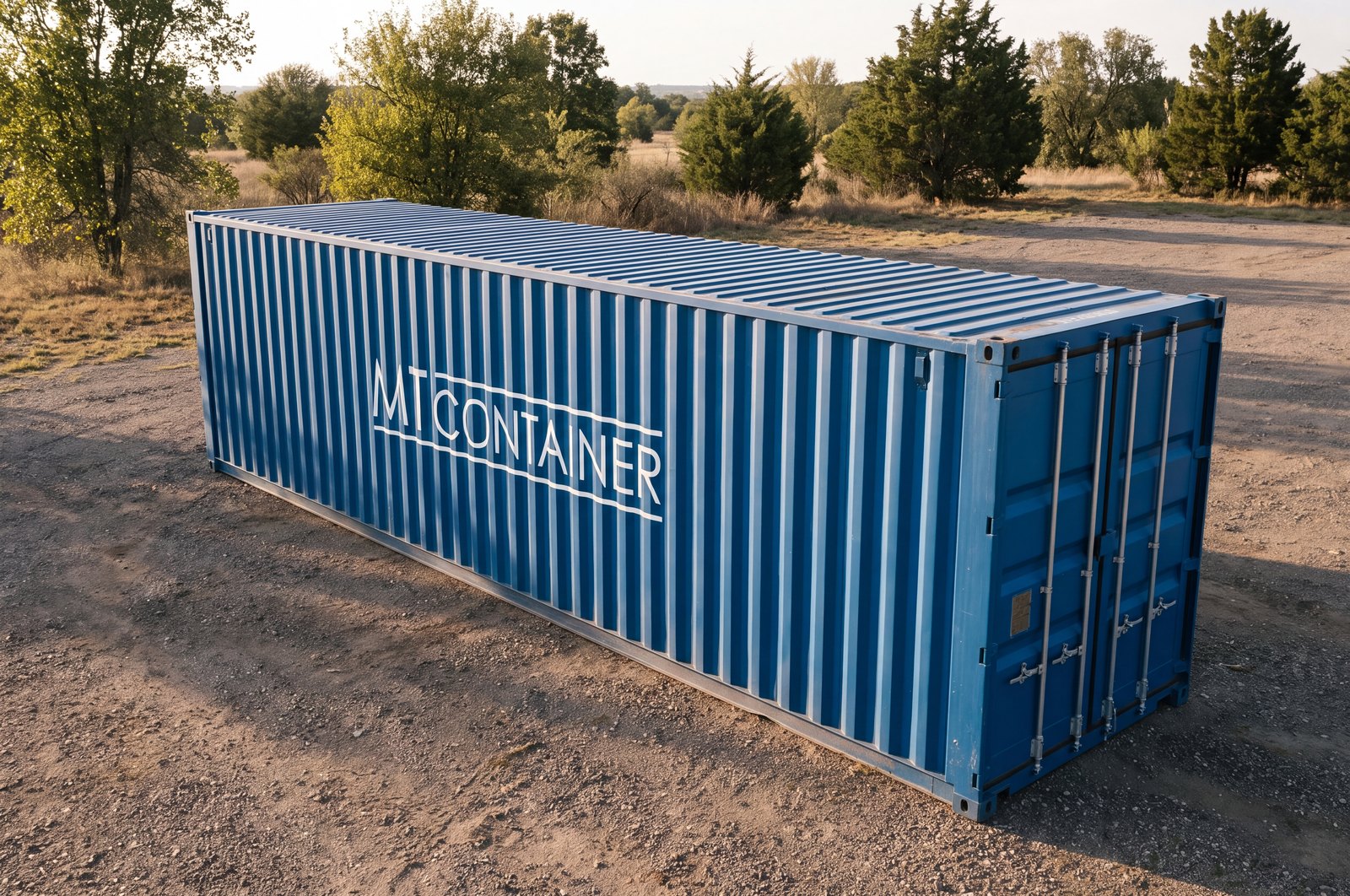
Updated November 2026 · Guide for US container owners and buyers
Which Shipping Container Roof Do You Mean?
A shipping container roof can mean the container’s own metal roof or a cover added above or between containers. Depending on which you mean, the next step is a repair, overhead protection or a covered bay (a roofed space between two containers).
This guide focuses on closed steel cargo containers. Their roofs use either self-supporting corrugated panels or flat panels resting on roof bows (supports beneath the panels). An added canopy needs its own supports and connections.
Inspect the Roof Safely
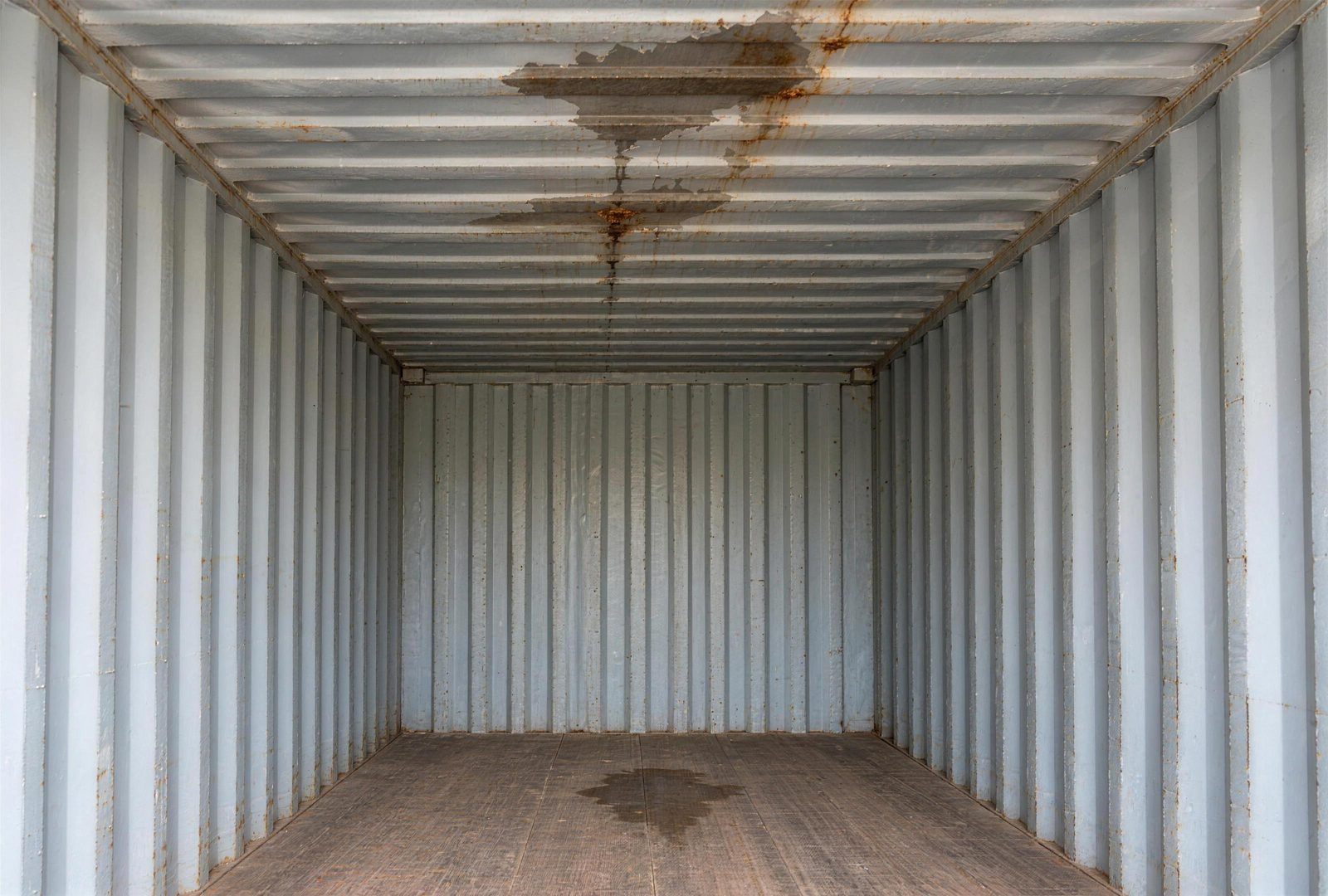
Start inside, with the doors secured open and a clear exit. Photograph water marks, corrosion, openings and patches. Ask for exterior photos that were taken safely.
Do not walk onto an unassessed container roof. Arrange suitable access and fall protection with the person doing the inspection. OSHA’s construction rules require employers to establish that a working surface can support workers safely.
Ask the inspector to document the roof panels, panel joints, roof-to-frame connections, top rails (the horizontal frame members along the upper edges) and any added vents or attachments.
- 1Roof panels: record surface condition and depressions.
- 2Panel joints and earlier repairs: record visible defects.
- 3Roof-to-frame edge and top rails: include them in the assessment.
How Strong Is a Shipping Container Roof?
The roof test in ISO 1496-1, the international standard for testing general cargo containers, uses approximately 660 lb over 23.6 × 11.8 in (300 kg over 600 × 300 mm), an area of about 1.9 sq ft (0.18 m²), uniformly distributed at the roof’s weakest area. The 1990 edition of ISO 1496-1 and ClassNK’s freight container rules (chapter dated June 2023) both document this test. The pound, inch and square-foot figures are our rounded conversions.
This is a test load for a new container design, not an allowable payload or snow-load rating for your unit. Corrosion, dents and modifications change what a roof can carry. Have a container repair contractor or a structural engineer check the unit before anyone walks on the roof or adds equipment.
Match the Finding to the Next Step
Use this checklist alongside Falcon Structures’ roof-maintenance guidance.
| Finding | Next step | Ask for |
|---|---|---|
| Debris or standing water | arrange safe cleaning and investigate drainage or low spots | photographs of the cleared surface and any damage beneath it |
| Surface rust or damaged paint | have the steel assessed before specifying preparation and recoating | the coating system and its required surface condition |
| Hole, split or leaking joint | request a repair assessment of the defect and the surrounding material | a defined repair area and a check of weather-tightness afterward |
| Deep sagging or frame damage | keep people off the roof and arrange a structural assessment | a repair-versus-replacement recommendation before adding loads |
| Moisture across the underside | investigate condensation alongside possible leaks | a record of weather, interior humidity and wet stored items |
Choose a Repair Scope Before a Coating
Ask the repair contractor to separate surface treatment from metal repair. The IICL repair manual (5th edition, 1999) describes roof-panel inserts and patches.
Request a scope that covers the defect, the surrounding steel, the method and the completion checks.
For weatherproofing, work in this order:
- 1. Clean and treat rust: remove dirt, oil, loose rust and failing paint, then prepare sound, dry steel as specified by the coating manufacturer. Sherwin-Williams ties this cleaning to good adhesion.
- 2. Repair holes: use a qualified repair contractor for welded metal repairs or patches. The Container Owners Association’s cargo-worthy guidance specifies welding and patching; sealant alone is not a replacement for missing steel. For storage-only use, agree on the repair method with your contractor.
- 3. Coat and check: follow the selected coating manufacturer’s requirements for primer, compatibility, weather conditions and curing. Agree on a leak check after the repair.
Separate Rain Leaks from Condensation
Water beneath the roof can enter through an opening or condense on cold steel. Record rain, temperature changes and wet stored equipment. As a starting point: water at one spot after rain points to a leak; moisture spread across the underside after a cold night without rain points to condensation. Neither pattern is proof.
For rain entry, have joints, repairs and openings checked. For condensation, review moisture sources, air movement and insulation together. EPA’s moisture guidance for homes points the same way: condensation can signal high humidity, more air movement helps, and cold surfaces can be insulated. A roof coating alone does not resolve moisture generated inside.
Plan a Shipping Container Roof Kit or Covered Bay
Shipping container roof kits cover a single container or span the gap between two containers. SteelMaster documents a gap-spanning roof project.
- Fabric canopy between containers: a tensioned membrane over an arched frame provides a covered bay. Covermore describes shelters that stretch from container to container and explains cover tension. Check fabric replacement, required tension and whether the container roofs remain exposed.
- Pitched or shed-style over-roof: a gable has two sloping sides; a shed roof (also called mono-pitch) has one. Shield describes modular steel gable kits. Insula shows pitched and mono roofs but no longer sells these kits individually. Check drainage and coverage.
- Sunshade cover: Industry Covers’ WorkShade uses permeable fabric above the roof, with an air gap and a frame bolted to the corner castings (the reinforced fittings at the container’s corners). This is shade, not a watertight replacement roof.
Before buying: confirm that the manufacturer sells and ships the system in the US. Obtain the manufacturer’s wind and snow design information for your location, along with drawings, installation instructions and attachment details. Confirm that your containers’ corner castings are compatible with the specified brackets. Shield’s FAQ documents corner-pin attachments; other systems differ. Have the supporting containers, connections, ground anchors and foundations checked together.
Confirm zoning, permits and required documents with the local building authority. San Diego’s cargo-container bulletin requires structural calculations for stacked containers; its rules apply only there. Check runoff, door clearance and maintenance access. For a DIY project, establish who handles lifting, safe roof access and inspection.
- 1Added canopy: specify the required coverage and usable opening.
- 2Connections: obtain details for the selected system.
- 3Supporting containers, anchorage and foundations: assess them together.
What MT Can Help You Source
MT Container has been trading containers from Hamburg, Germany, since 2008. We have supplied roof covers for container projects. Our team responds in English.
Our US offer covers the containers themselves. Roof kits, repairs and installation are separate work; plan them with your contractor.
For US buyers, new (one trip) and used 20 ft and 40 ft containers, including high cube (taller) versions, are sourced through our US partner network, subject to availability. Offers are priced in USD. The partner states the specific unit’s condition in writing.
“New/one trip” refers to an initial cargo journey; “cargo worthy” concerns suitability for transport; “wind and water tight” concerns weather entry; “as is” calls for particular attention to disclosed defects and terms. These trade terms do not replace the unit’s written description.
Tell us your ZIP code, intended use and container size. If you need roof photos or condition details, say so; what is available depends on the partner and the unit. US delivery is by container truck; confirm unloading arrangements for the location and prepare suitable access, unloading space and level ground.
For a smaller unit, see our 10 ft shipping container page.
Shipping Container Roof Questions
How do you seal a shipping container roof?
Clean and prepare the affected area, repair holes with a metal repair (welded, if the unit must stay cargo worthy), then apply the specified coating. Applying sealant over corrosion leaves the underlying defect unresolved.
Can you put a roof between containers?
Yes. Purpose-designed canopy systems can span between compatible containers. Have the complete structure and site assessed before choosing the kit or its attachments.
Can you walk on a shipping container roof?
Not until the roof has been assessed. The ISO roof test is a localized design test, not a walking allowance for a used unit. Corrosion, dents and modifications change what a roof can carry. Use suitable access and fall protection.
How much weight or snow can the roof hold?
The design test described above is a localized test, not a usable weight allowance. For snow, ask your local building authority for the design snow load at your site, then have an engineer check the actual unit and its supports against it.
Can you add a deck, solar panels or a roof vent?
Only with a design covering loads, supports, openings and weatherproofing. A deck also needs checks for the people using it and for safe access.
What should a quote for a roof repair or roof kit include?
Ask for itemized quotes covering repairs, the cover, engineering, permits, foundations, delivery and installation. The total depends on the roof’s condition and the site.
How do you insulate a shipping container roof?
Insulation belongs in a moisture-control plan: address leaks first, then select a system suited to the climate and interior use. EPA’s cold-surface guidance explains the principle; it does not specify a container insulation assembly.
Sources and Scope
Sources checked 2026-11-26. Drawings and images are illustrations; they do not show specific containers or MT projects. Historical manuals explain principles; actual repairs need agreed criteria.
- Falcon Structures: roof maintenance.
- IICL: Repair Manual for Steel Freight Containers, 5th edition (1999), roof section.
- OSHA: construction fall protection.
- EPA: moisture and condensation.
- San Diego: local cargo-container guidance.
- SteelMaster: roof project.
- Container One: condition terms; Conexwest: condition descriptions.
- ISO 1496-1:1990, roof test; ClassNK: general cargo container tests.
- Container Owners Association: repair guidance; Sherwin-Williams: surface preparation.
- Chupp Industrial (Covermore): container shelters; Chupp Industrial (Covermore): cover tension; Shield: roof kit information; Shield: FAQ on attachments.
- Insula: roof-over systems; Industry Covers: sunshade design.