
Container Ships: How Containers Fit into Ocean Transport
OOCL Spain has a published capacity of 24,188 TEU. Compare capacity, ship sizes and the journey from terminal to site.
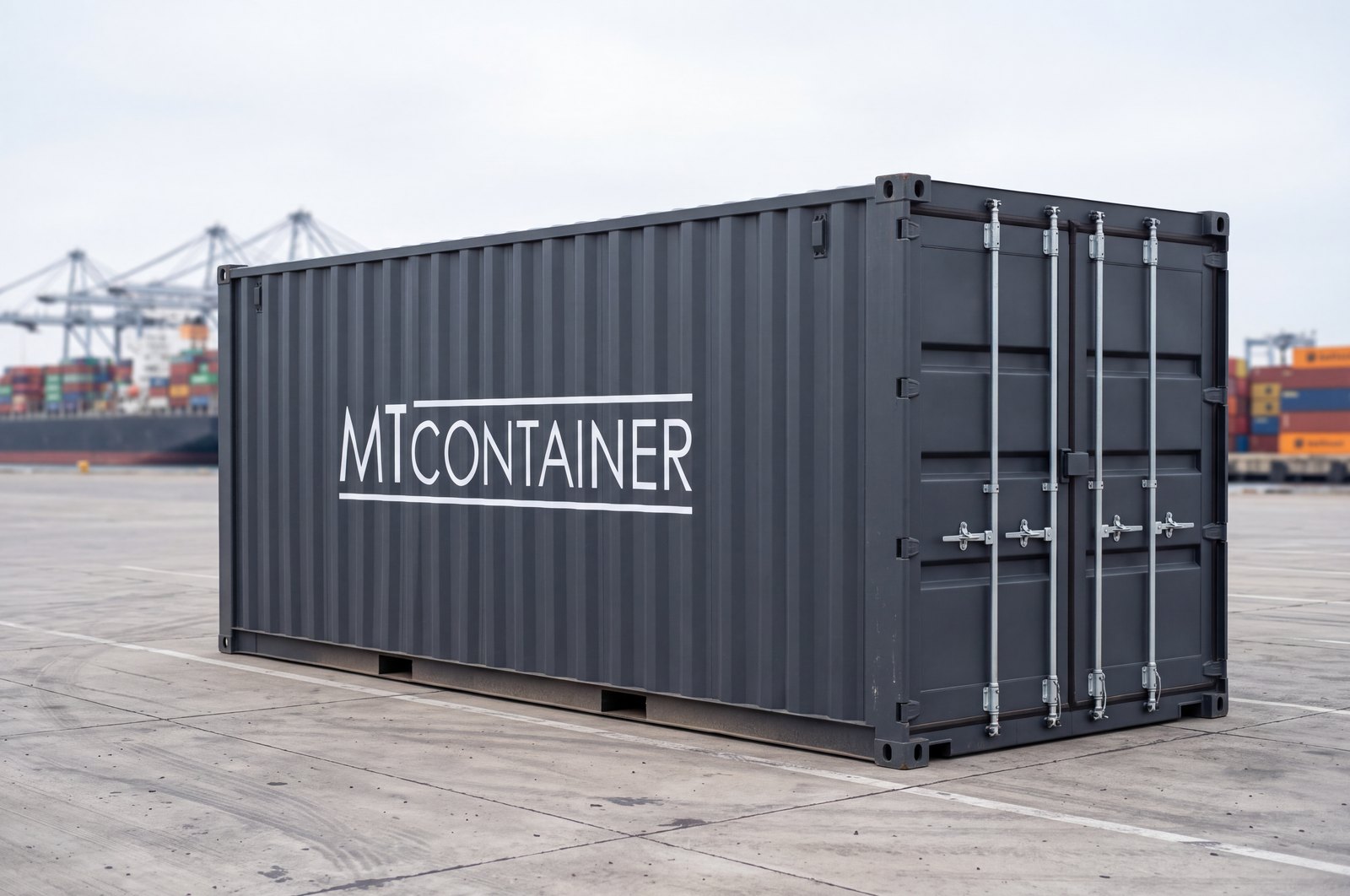
A container ship carries freight containers in cellular holds below deck and stacked on deck. Capacity is measured in TEU: OOCL Spain is listed at 24,188 TEU, the equivalent of 24,188 twenty-foot containers. The real number of boxes depends on container sizes and loading limits.
Updated November 2026 · Ocean transport explained
How Many Containers Can a Container Ship Carry?
The dated examples on this page range from 1,170 TEU for a feeder design to 24,188 TEU for OOCL Spain. Capacity is expressed in TEU, not as a count of physical boxes. A 20 ft container counts as 1 TEU; a 40 ft container counts as 2 TEU. These nominal sizes equal approximately 6.1 m and 12.2 m. See the Maersk shipping glossary.
A simple example: 100 twenty-foot containers plus 200 forty-foot containers make 300 boxes but 500 TEU (100 × 1 + 200 × 2 = 500). This is our own illustrative calculation.
The International Chamber of Shipping describes liner services: ships that follow fixed routes and timetables. Containers occupy holds below deck and sit on hatch covers, the closures over cargo holds, and the upper deck.
Container Ship Classes and Capacity Examples
Class names come from different things: a ship’s role (feeder), the canal locks it fits (Panamax, Neopanamax) or simply its size (ultra-large). Each capacity figure below is a dated example, not a class limit.
| Class | Meaning | Capacity reference | Source and date |
|---|---|---|---|
| Feeder | regional connections in a shipping network | 1,170 TEU design for newly built ships | X-Press Feeders announcement, December 1, 2021 |
| Panamax | sized for the original Panama Canal locks | approximately 4,500–5,000 TEU | US Bureau of Transportation Statistics, 2024 |
| Neopanamax | sized for the expanded canal locks | MSC MARIE, 17,640 TEU | Panama Canal Authority, transit on August 30, 2024 |
| Ultra-large | informal label for very large ships, with no fixed TEU threshold in our sources | OOCL Spain, 24,188 TEU | OOCL vessel particulars, built in 2023 |
Sources: X-Press Feeders, BTS, Panama Canal Authority and OOCL.
Post-Panamax describes ships exceeding the original lock dimensions. The canal authority defines Neopanamax as vessels larger than Panamax that comply with the size and draft limits of the new locks. These examples illustrate scale rather than a current world record.
Container Ship Sizes: Length, Beam and Draft
Length runs bow to stern; beam means width; draft is the depth below the waterline. The feeder row uses a different ship from the 1,170 TEU design above. The canal rows are size limits, not individual ships. Feet are our conversions, rounded to 0.1 ft.
| Reference | Length | Beam | Draft |
|---|---|---|---|
| Feeder example, Elbblue port profile | 502.0 ft (153 m) | 78.7 ft (24 m) | 26.2 ft (8 m), listed vessel draft |
| Panamax, canal definition | 965.0 ft (294.13 m), or 966.0 ft (294.43 m) for container ships | 106.0 ft (32.31 m) | 39.5 ft (12.04 m), tropical fresh water |
| Neopanamax, canal definition | 1,215.0 ft (370.33 m) | 168.1 ft (51.25 m) | 50.0 ft (15.24 m), tropical fresh water |
| Ultra-large example, OOCL Spain | 1,312.3 ft (399.990 m) | 201.1 ft (61.30 m), molded breadth | 53.7 ft (16.371 m), summer draft |
Sources: Port of Hamburg’s Elbblue profile, Panama Canal requirements for 2026 and OOCL’s particulars above. Canal rows reproduce classification definitions; operational exceptions and water-level restrictions require a separate transit check. Vessel drafts describe different reference conditions and change with loading.
How Terminals Load and Unload Container Ships
Ship-to-shore cranes transfer containers between vessel and quay. A spreader, the lifting frame attached to a crane, grips the container at its upper corners. Terminal vehicles move boxes between the quay and storage stacks. Loading places each box in its assigned ship position; unloading moves it ashore for its next leg.
APM Terminals Maasvlakte II describes crane spreaders, automated transport vehicles and import stacks organized by onward transport. Gard’s guidance below explains how the stowage plan and crane schedule become terminal work orders.
What a Stowage Plan Decides
A stowage plan assigns each container a bay (lengthwise), a row (across) and a tier (height). Discharge ports and special positioning requirements help shape it. Gard’s freight-container guidance explains the system.
Weight information matters before loading. Verified gross mass, or VGM, is the confirmed total weight of the packed container: its contents plus the container itself. Under the applicable Safety of Life at Sea (SOLAS) rules, the shipper, the party named as shipper on the transport document, provides it for stowage planning. IMO’s VGM guidance explains this loading requirement.
Ask your freight forwarder, the business arranging transport, which weight documents and submission deadlines apply.
How Containers Are Secured on Board
Twistlocks connect containers through their corner fittings, the reinforced connection points at the corners. Lashing rods and tensioning devices help restrain deck stacks. Below deck, cell guides provide vertical channels for the containers. The Polish Register of Shipping’s Publication 32/P (July 2025) describes these arrangements.
The vessel’s Cargo Securing Manual sets out its approved securing arrangements. DNV explains that loading and lashing checks account for stack weights and permissible forces. Loading limits are vessel-specific.
1. Deck stows
2. Below-deck stows
3. Securing fittings
4. Reefer power connection
How Reefer Containers Get Power at Sea
A reefer is a refrigerated container with powered temperature-control equipment. Maersk Container Industry explains that reefer equipment uses three-phase alternating-current (AC) power, supplied from the vessel, shore or a generator set as appropriate.
Confirm suitable power connections at sea, in the terminal, inland and at the destination. A genset is a generator set; it can power a reefer during an inland leg, for example. For the equipment itself, see our reefer container page.
From Port to Depot to Customer
For imported goods, the ship is unloaded at a terminal. After customs clearance, a container can travel on a chassis, the wheeled trailer frame that carries it, or continue inland by rail. The World Shipping Council’s example journey ends at a distribution center where the cargo is unloaded.
An empty-container depot serves a different purpose: storage, inspection, cleaning and repairs. Gard’s guidance describes these depot functions. For a carrier’s container, check the assigned return location; Maersk’s return guidance shows that it is shipment-specific.
For a container purchase, use this checklist. The drawing below the checklist shows a possible route for an empty container, separate from the imported-goods journey.
- Before you agree to buy: request the offered unit’s identifier, condition description and recent photos.
- Before collection: confirm the authorization needed to collect the unit, the pickup location and who arranges the truck.
- At your site: agree on the unloading method and prepare access, unloading space and a level placement area.
An example from our own work in Europe: one 10 ft and three 20 ft containers were set up in 2024 as lockable storage for tools and materials at a construction site in Hamburg.
In condition descriptions, one-trip means a unit used for one freight journey; cargo worthy concerns structural suitability for cargo use. Wind and water tight means the unit keeps out wind and rain; as is means sale in current condition. Ask for the condition class of the specific unit in writing.
1. Port terminal
2. Empty-container depot
3. Customer site
Request a Container for a US Site
MT Container has been trading containers from Hamburg, Germany, since 2008. Our team responds in English.
For US buyers, new (one-trip) and used standard containers in 10 ft, 20 ft and 40 ft sizes, including 20 ft and 40 ft high cube, are sourced through our US partner network, subject to availability. High cube means a taller container variant. Quotes are in USD, with pickup or delivery in the US. Delivery is by container truck; the unloading method is agreed for the location.
Send us your ZIP code, intended use, preferred size, quantity and condition requirements. For ocean freight bookings and shipment tracking, contact your shipping line or freight forwarder.
Questions About Container Ships
How many containers fit on a container ship?
OOCL lists 24,188 TEU for OOCL Spain. Filled only with 40 ft containers, that would equal 12,094 boxes (24,188 ÷ 2). This is our own calculation, not a loading plan; weight and securing limits also apply.
What is a TEU?
TEU stands for twenty-foot equivalent unit. One 20 ft container counts as 1 TEU, and one 40 ft container counts as 2 TEU. That is why a ship’s TEU figure and its number of boxes differ.
How big is a container ship?
Sizes vary widely. In our examples, a feeder vessel is 502.0 ft (153 m) long. OOCL Spain is 1,312.3 ft (399.990 m) long and 201.1 ft (61.30 m) wide. The size table above adds beam and draft for each example.
What is the difference between Panamax and Neopanamax?
Both are Panama Canal size classes. Panamax ships are up to 965.0 ft (294.13 m) long, or 966.0 ft (294.43 m) for container ships, and 106.0 ft (32.31 m) wide. Neopanamax ships are larger but fit the new locks: up to 1,215.0 ft (370.33 m) long and 168.1 ft (51.25 m) wide.
Are containers carried below deck?
Yes. Containers occupy cargo holds as well as deck positions. Cell guides help locate and support containers in the holds.
How do refrigerated containers work on a ship?
Electrical power from the vessel runs their refrigeration equipment. The planned position needs a suitable electrical connection.
Does buying a container include ocean shipping?
The written offer defines what is included. Confirm the container, collection or delivery, and unloading arrangements. Ask your shipping line or freight forwarder about ocean freight bookings.
Sources and Scope
Condition terminology: compare the Conexwest condition guide and the Gulf Coast condition definitions.
Sources checked 2026-11-26. The linked technical sources explain ship operations; MT’s US offer is limited to what our US partner network can supply, subject to availability. Vessel capacities are dated examples. TEU calculations and length conversions are our own, using the NIST foot-to-meter definition. The drawings explain relationships schematically.