
Shipping Container Rust and Service Life: What to Inspect
Check the steel beneath the rust, the weather seals and the supporting frame. Use this guide to plan your inspection, compare repair needs and care for the container.
Updated November 2026 · Inspection and care for steel storage containers
What Shipping Container Rust Tells You
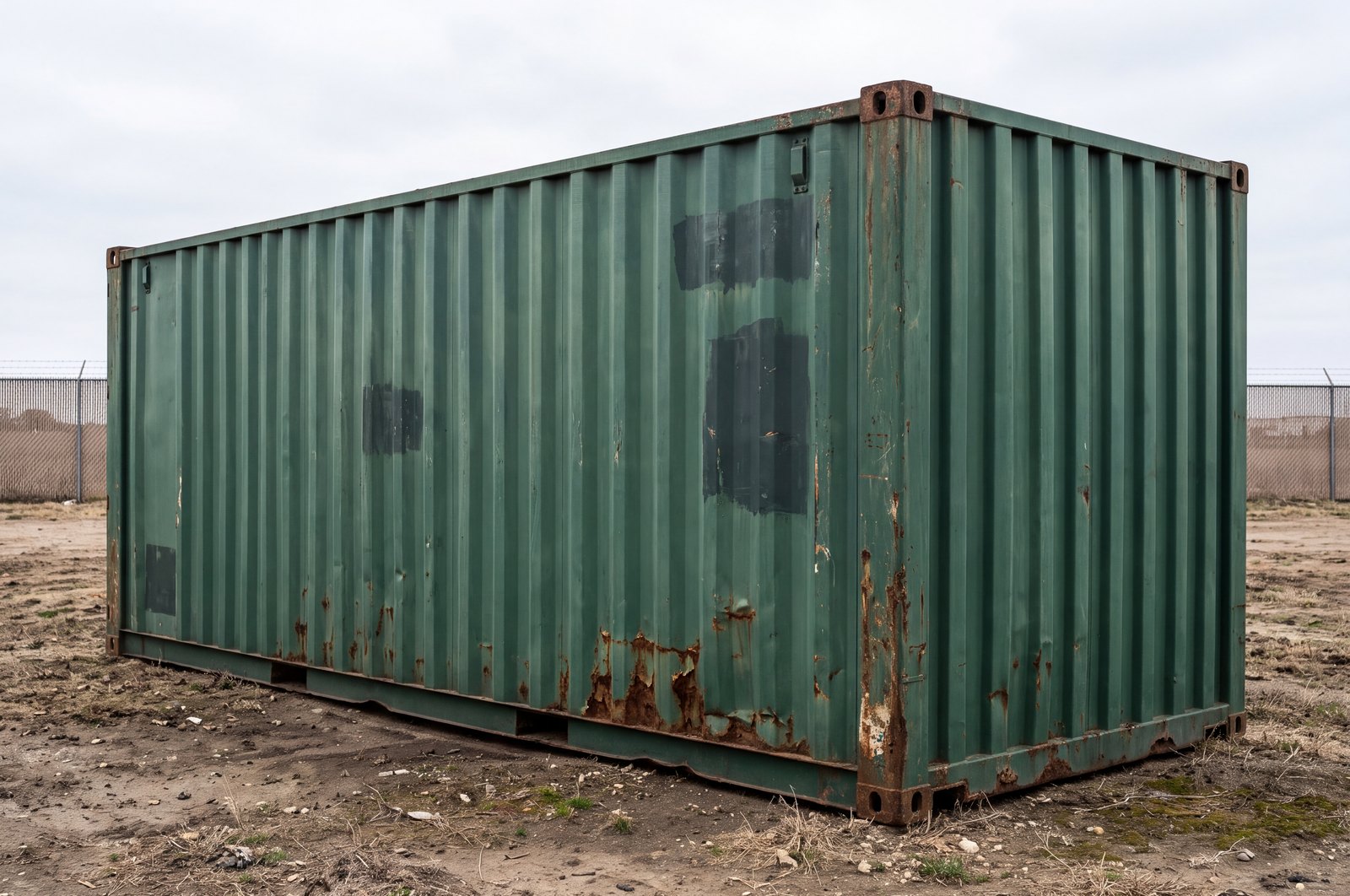
Shipping container rust warrants a closer look at the metal beneath it. A discolored patch calls for inspection and coating care; deep pits, holes, cracked welds or damaged framing call for a repair assessment before you buy or load. Four things decide how serious rust is: where it sits, how much metal is gone, whether the unit still keeps water out and what you plan to use it for.
This guide covers standard containers. Have suspected structural damage assessed by a container surveyor, meaning a qualified container inspector. Appearance alone cannot establish remaining strength.
Inspect the Surface, Edges, Roof, Floor and Doors
Request recent close-ups and wider photos of the actual unit, including repairs. The list below combines the inspection and maintenance sources linked on this page. Use it as a checklist, not as a damage-acceptance standard.
| Area | Look for | Next step |
|---|---|---|
| Surface | scratches, peeling paint, rust staining and pits | record each patch and establish whether corrosion has removed metal. |
| Edges and frame | corrosion at seams, welds, corner posts and lower rails | have cracks or suspected loss of steel thickness assessed before purchase or loading. |
| Roof | holes, damaged seams, dents that hold water and accumulated debris | arrange a safe inspection from suitable access equipment and resolve leaks. |
| Floor and underside | damaged floor panels, damp patches and corroded steel supports beneath | request an underside inspection where it can be performed safely. |
| Doors | damaged seals, corrosion around the frame and stiff hinges or locking bars | check opening, closing, sealing and locking before accepting the unit. |
The ACMS inspection bulletin covers walls, roofs, doors and structural defects. If Insurance’s inspection guidance adds underside rails, cross members and door sills. Cross members are the steel supports that run across beneath the floor; the sill is the lower frame of the doorway.
Assess the floor covering and its supporting steel separately. The UK P&I Club and TT Club packing guide identifies floor-panel damage and excessive corrosion of corner posts or floor bearers, the steel members that carry the floor, as inspection concerns. Have a surveyor assess these findings before lifting or loading.
- 1Surface and coating
- 2Edges, welds and frame
- 3Roof and seams
- 4Floor and steel supports beneath
- 5Doors, seals and hardware
Surface Rust, Pitting or a Hole?
Surface discoloration: the coating is stained or broken, but it is not yet clear whether steel is missing. Inspect the exposed steel to establish how deep the corrosion goes. Pitting: small cavities in the steel indicate localized material loss. Perforation: a hole passes right through the panel. Record cracks and damaged welds separately.
Hempel’s coating guide treats rusted surfaces with visible pitting as a distinct condition and describes the assessment of existing coatings before maintenance. Before comparing offers, get a written repair scope for holes, pitting or suspect framing.
Request photos taken before repainting and ask what was repaired underneath. For suspected metal loss, ask which measurements and repair criteria apply. Fresh paint does not replace missing steel, so ask for the repair record as well.
- 1Discoloration: inspect coating and steel
- 2Pitting: localized cavities
- 3Perforation: an opening through the panel
How Long Does a Shipping Container Last?
Marine service and storage have different time horizons. In its marine-leasing business overview, Mitsubishi HC Capital states that containers are sold after a total service life of 13–15 years; its main lessees are shipping companies. This describes a commercial service cycle rather than a physical expiration date.
For continued storage use on land, UK container supplier 3J Services estimates a further 10–15 years for used containers entering the resale market. This is that supplier’s expectation rather than a universal standard. Do not add the two ranges together: they describe different fleets and different starting points. MT makes no fixed service-life promise in years.
Standing water and contact with damp ground promote corrosion. We also treat coastal salt air as a risk, based on the steel research cited below. On-Site Storage’s rust-prevention guidance identifies wet-ground exposure; Falcon’s maintenance guide identifies standing water and debris on roofs. Keep drainage clear and the steel base away from wet soil. Inspect the actual unit’s roof, underside and repair history before planning long-term use.
For transport, the International Convention for Safe Containers, or CSC, provides an inspection framework. The Institute of International Container Lessors states that the first examination is due within 5 years of manufacture and that, under the periodic examination scheme, later examinations follow at intervals of at most 30 months. These are examination intervals, not a lifespan or a storage-maintenance schedule. Ask which inspection program and current documentation apply to the unit.
Ask the seller which steel grade the unit’s specification lists. If it is weathering steel, keep in mind how that material works: it gains its corrosion resistance from a surface layer that forms under suitable conditions. Persistent moisture and coastal chlorides can impair that layer. The FHWA research concerns bridge steels; it addresses material behavior rather than container lifespan.
Care and Rust Repair: Match the Work to the Condition
Check for roof debris, trapped water and coating damage. Check again after severe weather; we also suggest a check after the unit has been moved. Falcon’s guide, linked above, covers roof drainage, paint damage, seals and hinge lubrication.
Inside, trace damp patches back to leaks, condensation or wet contents. Keep vents clear. Reduce excess moisture, and consider air movement, dehumidification and insulation together. The EPA’s moisture guidance explains these controls for buildings; the right choice for your container depends on climate and contents.
- 1. Assess: agree which defects need steel repair and which need coating maintenance.
- 2. Prepare: decide whether the old coating must come off completely or whether sound parts can stay. Then follow the coating manufacturer’s instructions for cleaning and rust removal.
- 3. Coat: use a compatible system and follow its application conditions, drying times and recoating instructions.
- 4. Record: keep dated photos, the repair scope and coating details for the next inspection.
Check the dew point, the temperature at which moisture in the air condenses on a surface. Hempel recommends keeping the steel at least 5°F (3°C) above it during painting and drying. Example: at a dew point of 50°F (10°C), the steel surface should be at least 55.4°F (13°C). A difference of 3°C equals 5.4°F; Hempel rounds it to 5°F. The example is our calculation, not a site reading. Measure conditions and follow product limits. Source: Hempel application notes, page 5.
Before Buying: Get the Condition in Writing
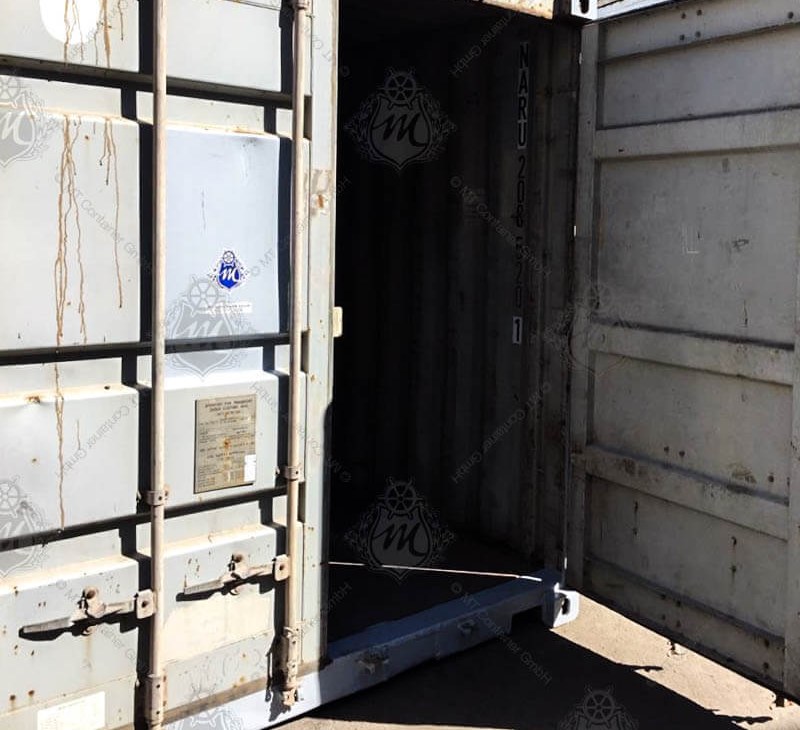
Some US sellers distinguish new / one trip, sold after an initial cargo journey; cargo worthy, a transport-related condition description; wind and water tight, which concerns weather entry; and as is, where defects may remain. Confirm inspection evidence, agreed repairs and written terms. Even one-trip containers can have handling marks.
These explanations draw on Container One’s terms and Conexwest’s condition guide. Their warranties belong to their own offers. For a US purchase through MT, the partner states the unit’s condition class in writing.
Request a Container for Your Site
MT Container has been trading containers from Hamburg, Germany, since 2008. Used and new (one trip) standard containers are sourced through our US partner network, subject to availability, with pickup or delivery in the US and offers priced in USD. Our team responds in English.
One example from Europe: on a construction site in Hamburg, one 10 ft and three 20 ft containers went into use in 2024 as lockable storage for tools and materials. This is an example of use, not evidence of service life.
Send us your ZIP code, intended use, preferred size and condition requirements. For delivery by container truck, provide details of the driveway and unloading area and arrange firm, level ground. Confirm the unloading method for your site. See our 10 ft container page.
Shipping Container Rust Questions
Do shipping containers rust?
Yes. Steel containers rust where the coating is damaged or water collects. Inspect the roof, lower frame and door edges first, and check whether metal has been lost.
How do you stop rust on a shipping container?
Keep water away from the steel. Clear debris and standing water from the roof, keep the base off wet ground and repair damaged paint as the coating manufacturer instructs. Holes and frame damage need steel repair, not paint.
Can you paint over shipping container rust?
Only after preparing the surface. Follow the instructions for the coating system you choose, and resolve holes or structural damage before painting.
Is a rusty shipping container worth buying?
It can be, if the rust is on the surface and the frame is sound. Holes, deep pits or frame corrosion need a written repair scope first. Add up the cost of the container, delivery and agreed repairs, and compare the total with another suitable unit.
How long will a shipping container last outside?
Used containers can have years of storage service left: 3J Services estimates a further 10–15 years after resale, as explained above. That supplier estimate is a planning reference, not an MT guarantee. Inspect the unit and account for salt, standing water and damp ground.
Sources and Scope
Sources checked 2026-11-26. The linked inspection documents concern transport equipment; the coating and moisture sources have the scopes stated above. The service-life ranges come from one marine lessor and one UK supplier; they are not US fleet statistics. Structural assessment and corrosion acceptance limits require a separate survey.