
Shipping Containers as Bunkers or Storm Shelters: Questions to Resolve First
A shipping container bunker needs a separate structural and shelter assessment. Compare the loads, standards and evidence before choosing a structure.
Updated November 2026 · Suitability guide
Can a Shipping Container Be a Bunker?
A standard shipping container is not a ready-made bunker or underground shelter. A shipping container bunker changes the purpose of a freight box from cargo transport to occupied shelter. Burying the box adds earth and groundwater loads that call for a different structural assessment. For a shipping container storm shelter, the evidence must cover the complete shelter, its site and its installation.
Start by defining the hazard: tornado, hurricane or another threat. Then compare a purpose-designed shelter with any proposed container conversion before you buy a box.
Why Stacking Strength Differs from Burial Strength
In the International Maritime Organization’s CSC tests, stacking forces act through the corner fittings, the reinforced connection points at the corners. CSC stands for the International Convention for Safe Containers. The IMO/ILO/UNECE CTU Code, the guidance for packing cargo transport units, describes how cargo loads transfer to the corner posts, the vertical frame members at the corners.
The corrugated walls have structural duties in freight service, including resisting specified cargo loads. They are not retaining walls designed for earth pressure. Burial puts load on the roof and walls across their entire surfaces. That is a different condition from the corner-supported stacking test.
The CSC roof test applies approximately 660 lb (300 kg) over 23.6 × 11.8 in (600 × 300 mm) at the roof’s weakest area. These conditions describe a concentrated roof test. Whole-roof capacity and permissible earth cover require separate assessment. The test text itself gives 660 lb; the inch values are our rounded conversions.
1. Blue: stacking through corner structure
2. Orange: roof surface loading
3. Orange: pressure against a side wall
What Happens When a Container Is Buried
Walls and roof: soil presses inward on the side panels and downward on the roof. If those loads exceed the panels’ resistance, walls can bow inward and roof panels can sag or buckle. These potential failure modes are our inference from the different loading conditions; the actual unit needs individual assessment. The CSC transport tests cover freight service. Burial depth and allowable soil cover require separate engineering evidence.
Water and escape: FEMA P-361 addresses groundwater pressure, buoyancy (the upward force that can lift a structure) and water entering below-ground shelters. It also warns that storm debris can block an exit. A sound enclosure alone leaves access and escape unresolved.
Corrosion: the Federal Highway Administration’s geotechnical guidance links buried-steel corrosion to soil moisture, oxygen, pH and salts. Soil exposure therefore needs its own durability assessment; an above-ground condition grade provides different information.
Match the Proposal to the Intended Use
Use this comparison to write the project brief. The shelter checks follow FEMA’s guidance and the scope of ICC 500; the storage entry is our purchasing recommendation.
| Use | Main question | Evidence to request |
|---|---|---|
| Above-ground storage | condition and suitability for stored goods | unit description and placement assessment |
| Tornado shelter | wind, debris and occupant protection | shelter design, component testing and installation records |
| Hurricane shelter | wind protection, flood exposure and occupancy needs | site assessment and hurricane shelter design |
| Buried shelter | earth pressure, groundwater, access and the intended hazard | site-specific underground structural design and shelter evidence |
Trade grades answer a different question: “one trip” means an initial cargo journey; “cargo worthy” concerns cargo-carrying condition; “wind and water tight” concerns weather protection; “as is” requires careful review of defects and sale terms. Read the seller’s written definition for the specific unit. These labels are separate from shelter compliance.
What FEMA P-361 and ICC 500 Cover
ICC 500, the storm shelter standard of the International Code Council, sets minimum design and construction requirements for tornado and hurricane storm shelters. Its scope includes structural performance and occupant needs such as exits, ventilation, lighting, sanitation and usable floor space.
FEMA P-361, fifth edition, November 2024, uses ICC 500-2023 as its technical basis and adds FEMA criteria and guidance. FEMA distinguishes an ICC 500 storm shelter from a safe room that meets its additional criteria. FEMA guidance is not automatically local law everywhere.
Ask the building official and the designer which adopted code, standard edition and funding requirements apply to your project.
Purpose-Designed Alternatives to Compare
Compare a purpose-designed ICC 500 storm shelter or a safe room meeting the additional FEMA P-361 criteria. Options include site-built rooms and prefabricated units. The Pacific Northwest National Laboratory’s shelter guide describes above-ground and below-ground locations; accessibility and flood exposure help determine which deserves consideration.
For a prefabricated option, request testing evidence for the exact product and door assembly. Texas Tech University’s National Wind Institute documents debris-impact testing and points to prefabricated shelters that passed it. That page dates from 2021, so ask the manufacturer for current evidence. A test result covers the tested configuration; site suitability and foundation adequacy still need review. FEMA P-361 addresses verification of foundation, anchoring and installation.
Read Wind and Debris Numbers Correctly
The residential safe room designs in FEMA P-320 (2024), Section 3.1, use a design wind speed of 250 mph (402 km/h). Their debris-impact basis includes a 15 lb (6.8 kg) nominal 2-by-4 lumber missile traveling horizontally and striking end-on at 100 mph (161 km/h). The metric values are our conversions.
Those figures describe specific shelter design and test conditions. Applying them to an ordinary steel container would require shelter-specific evidence. A shelter assessment connects the walls, roof, door assembly and anchorage to the applicable requirements. Anchorage means the connections that transfer forces into the foundation.
Check the Site, Door and Air Supply Together
FEMA’s ICC 500-2023 summary covers impact and pressure testing, openings, foundations, entry and exit arrangements, and usable floor area. Its requirements explain why a strong-looking door or a large empty floor is only part of the assessment.
- Site: request the ground, groundwater and flood assumptions used in the design.
- Envelope: ask how the roof, walls, door assembly and openings work together as the protective enclosure.
- Occupants: describe who will use the shelter, their accessibility needs and the intended occupancy period.
- Operation: ask how ventilation, lighting, entry and emergency exit arrangements remain usable during the design event.
1. Roof and enclosure
2. Door assembly and exit
3. Air supply and openings
4. Foundation and site
Request an Independent Structural Review First
FEMA recommends involving a licensed design professional because of the intended function of safe rooms and the site-specific conditions that need to be addressed. For a proposed container conversion, hire an independent structural engineer licensed for the project’s location before purchase or excavation.
Our recommended review brief asks the engineer to explain the load path, meaning how forces travel through the structure into the ground, and to assess the actual unit, the proposed alterations, the underground loads and the foundation. Ask the wider design team to cover shelter testing, access, ventilation and lighting.
Request a written comparison with a purpose-designed shelter that identifies the evidence needed before either option can proceed. Then ask for a clear conclusion: suitable as documented, requires redesign, or unsuitable for the stated use.
Request an Empty Container for Storage in the US
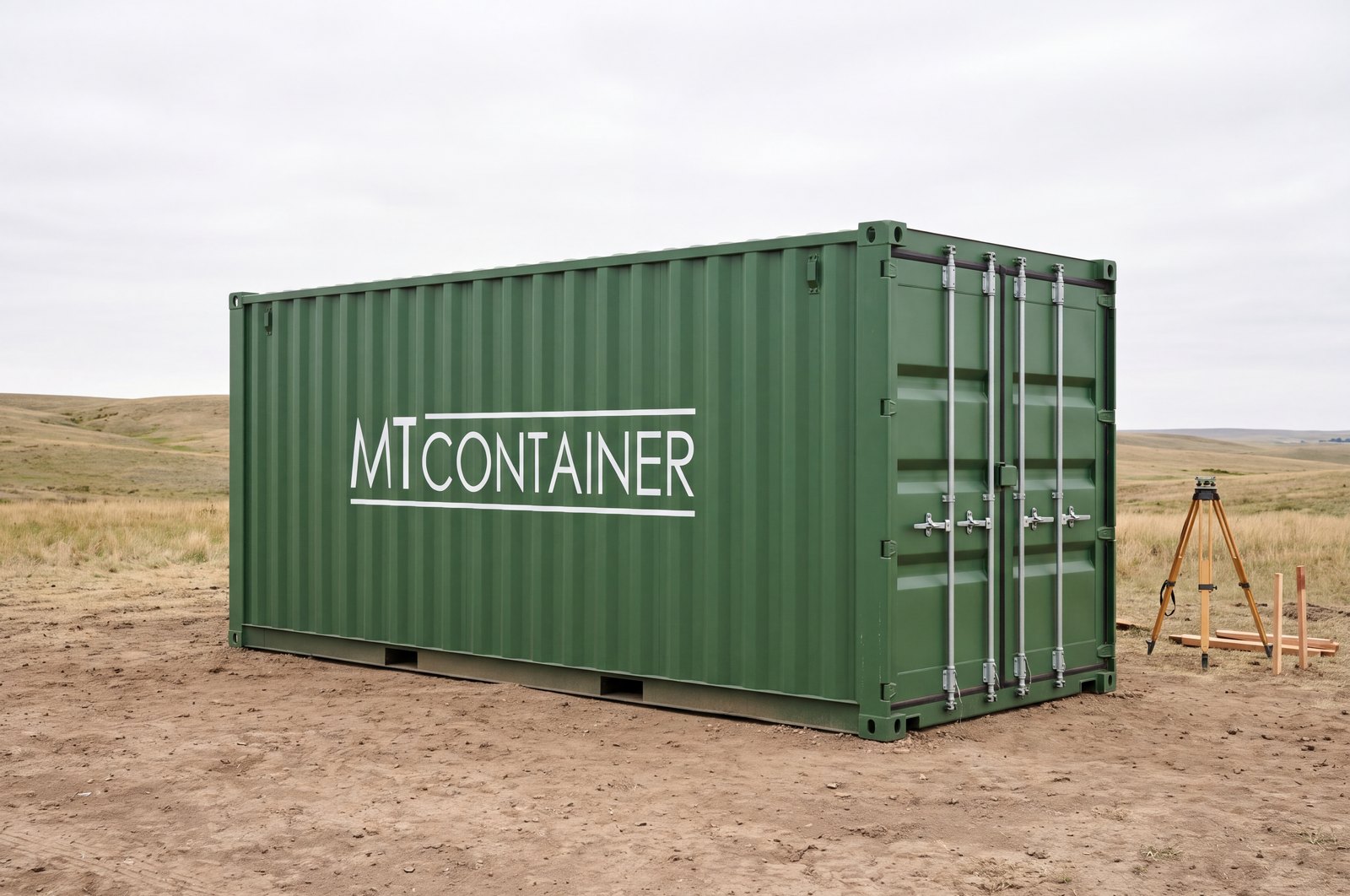
MT Container has been trading containers from Hamburg, Germany, since 2008. For above-ground storage, new (one trip) and used standard containers are sourced through our US partner network, subject to availability. The partner states the condition of the offered unit in writing. Quotes are in USD. Our team responds in English.
An example from Europe: on a construction site in Hamburg, one 10 ft and three 20 ft containers were set up in 2024 as lockable above-ground storage for tools and materials.
Send us your destination ZIP code, intended storage use, preferred size and condition. Pickup or delivery in the US is available; delivery is by container truck, and the unloading method is clarified for each site. Prepare clear truck access, room for unloading and a firm, level placement area, and send site photos for review. This inquiry is for an empty storage container. MT does not offer a bunker or storm shelter through this page.
Questions About Container Bunkers and Storm Shelters
Can you bury a shipping container?
No, a standard freight container should not simply be buried. Its transport tests establish different loading conditions. Have an independent structural engineer assess a complete underground design before considering a container for that use.
Are shipping containers tornado proof?
Not by freight approval alone. That approval establishes transport-related performance. Suitability as a tornado shelter requires evidence for the shelter system, including the enclosure, openings, foundation and installation.
Can a storm shelter be above ground?
Yes. Storm shelters may be located above or below ground, according to the Pacific Northwest National Laboratory’s shelter guide. Choose according to the hazard, the site and the assessed design.
How deep should a shipping container bunker be?
Depth is a site-specific engineering decision. Roof loading, earth pressure, groundwater, access and the intended hazard all belong in the same assessment. This guide supplies questions for that assessment.
Does FEMA certify shipping container shelters?
No. FEMA states that it does not verify or certify design calculations or products. The licensed design professional who signs the certification attests that the design meets the requirements named on it.
Sources and Scope
Trade vocabulary: Conexwest condition descriptions and Western Container Sales condition explanation. Their descriptions explain terminology. These companies are cited as sources only. The partner supplying your unit defines its condition.
Site preparation: Eveon delivery checklist, used for access and ground-preparation questions only.
Sources checked November 26, 2026. Technical sources are linked beside the relevant explanations. The load comparison and review checklist are our synthesis of those sources. MT’s commercial statements follow its confirmed US supply scope. This page assesses suitability and purchasing questions; the project design belongs with the qualified design team.