
Shipping Container Condition Grades: One Trip, Cargo Worthy and WWT
Choose a condition grade around your intended use. Compare the terms, inspect the specific unit and request a written description before buying.
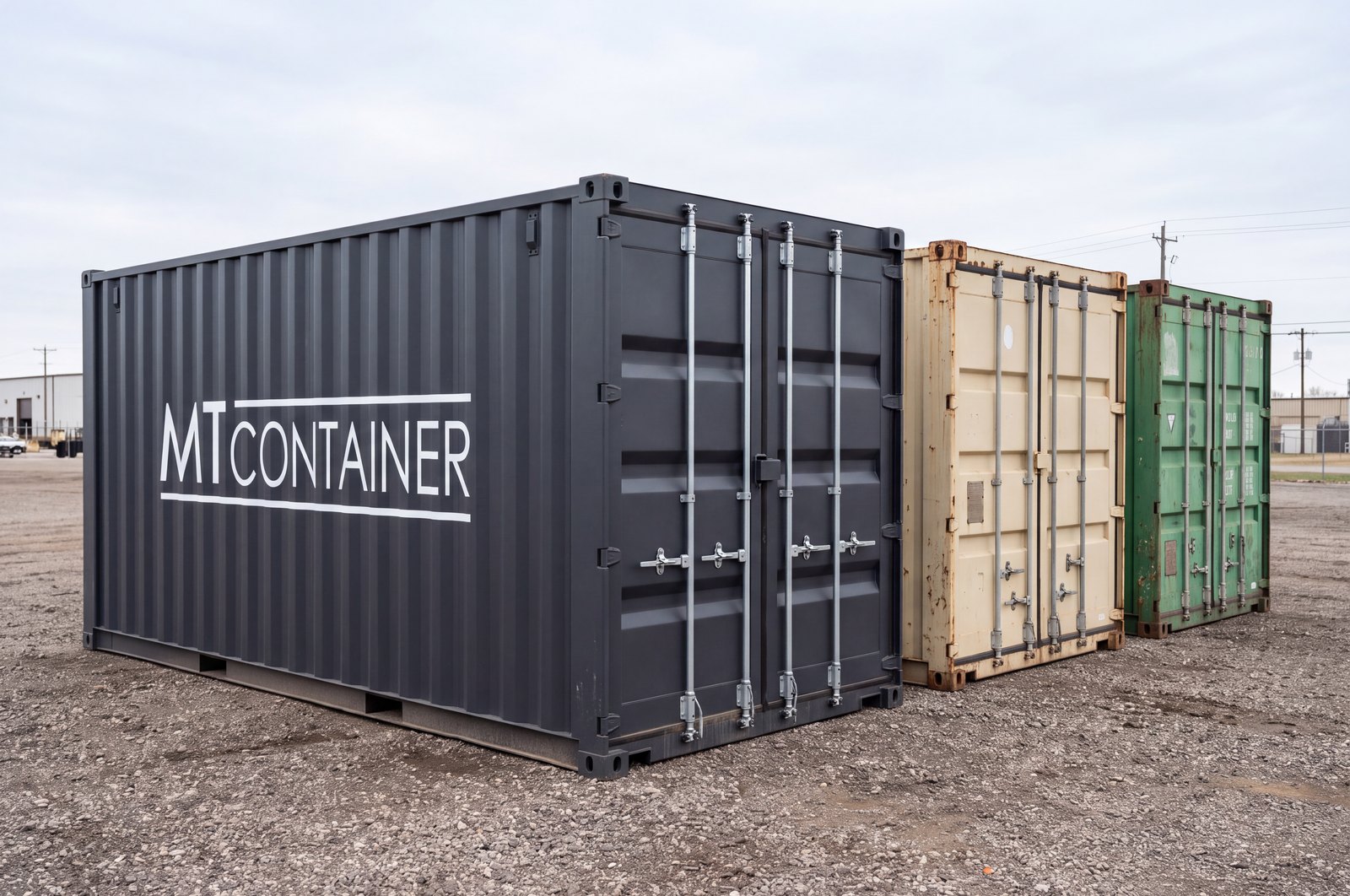
Updated November 2026 · Buying guide
What Does Cargo Worthy Mean?
Cargo worthy describes a container’s structural condition for carrying cargo. For an ocean shipment, ask for the current status under the International Convention for Safe Containers (CSC), inspection evidence and the shipping line’s acceptance requirements.
Start with the job: storing equipment, shipping goods or preparing a conversion. Then compare the specific unit, its condition description and the written terms. US sellers use the terms one trip, cargo worthy, wind and water tight and as is differently, so read each description alongside the seller’s terms.
Compare Shipping Container Condition Grades
A seller’s terms define the commitments behind each grade. The comparison below separates what each term describes from the evidence to request.
| Grade | What it describes | What to check | What to request |
|---|---|---|---|
| One trip / new | an initial cargo journey | handling marks, floor and doors | recent photos of the unit and the written one-trip description. |
| Cargo worthy / CW | structural fitness for cargo | frame, repairs and working doors | current CSC status and inspection evidence for shipping. |
| Wind and water tight / WWT | protection against wind and rain | roof, walls, seals and floor | written weather-tight terms and disclosed defects. |
| As is | sale in the stated current condition | defects and the work needed | the defect list, exclusions and any agreed repairs in writing. |
1. Roof condition
2. Walls and visible damage
3. Frame and corners
4. Door seals and hardware
Choose a Grade for Your Use
Use these starting points to compare offers. A written grade describes one unit, so check each unit on its own.
| Use | Starting grade | Before buying |
|---|---|---|
| Export / ocean freight | Cargo worthy | Ask for current CSC status and inspection evidence, and confirm shipping-line acceptance. |
| Ground-level storage | Wind and water tight | Check roof, seals, doors and moisture control. |
| Conversion | One trip when appearance matters | Have a qualified specialist assess the structure for planned openings. |
| Short-term storage | Wind and water tight | Match the grade to the job, not to the length of use. |
| Repair project | As is | Get the defect list and a written repair scope first. |
One Trip: Check the Arrival Condition
A one-trip container has carried an initial cargo shipment to the US. It can still show handling marks: Container One’s published terms allow for forklift tire marks on the floor, light dents or scratches.
Ask for photos taken after arrival and confirm that they show the unit being offered. If appearance matters, specify the color and the acceptable cosmetic condition in the quote.
Cargo Worthy vs. Wind and Water Tight
Cargo worthy is about carrying cargo; WWT is about keeping weather out. Western Container Sales describes a cargo-worthy unit as a used container that can pass a CSC survey and be used for export. Here, survey means a condition inspection. Conexwest describes structural soundness and functional doors. Gulf Coast Containers lists a grade named “Used Cargo Worthy (Non-Certified)”. That is why the inspection and shipping paperwork need a separate check.
For storage, compare the condition of the enclosure and the seller’s written weather-tight commitment. For shipping, send the proposed unit’s details to your shipping line or freight forwarder (the company that arranges the shipment) and establish what evidence is needed before booking.
CSC covers safety approval and examination. Ask for the unit’s current CSC status and the relevant inspection record, and have the shipping line confirm its booking requirements.
Weather-tightness and condensation control are separate issues. Moisture can condense when humid air meets a cold surface. For sensitive contents, plan moisture control around the climate and the goods being stored.
An example from our work in Europe: on a construction site in Hamburg, one 10 ft and three 20 ft containers served as lockable storage for tools and materials from 2024 through 2026. For a job like that, the questions that matter are weather protection, working doors and secure locking, not shipping paperwork.
As Is: Define the Work Before Buying
As-is containers are offered in their current condition. Defects can include damaged doors, seals or floors. Ask the seller to identify any outstanding damage and to explain exactly which condition commitments and remedies are included in the sale.
Read the sale terms even when a container carries another grade. Gulf Coast Containers, for example, lists condition grades while stating that its sales are as is.
If you are considering repairs, obtain an assessment and a written scope first. Then weigh the container, repair work, transport and unloading together.
Inspect the Unit Behind the Grade
Use recent photos and inspection records to review the unit being offered. Chubb’s inspection checklist covers the shell, structural components, door hardware, seals, floor and cleanliness. Ask a qualified inspector to assess structural damage and suitability for your intended use.
- Shell and frame: request views of the roof, walls, corners and underside, with close-ups of holes, corrosion, deformation and repairs.
- Doors: ask for a video showing the doors in operation and close-ups of seals, hinges and locking gear.
- Interior: request floor and ceiling views and a written answer on dampness, odors, residue and known previous use.
- Evidence: make sure the photos, condition description and inspection record all refer to the same unit identifier.
If the seller allows an on-site inspection, arrange safe access and have an inspector obtain roof and underside views. If not, rely on recent photos, video and the written description. At handover, compare the delivered unit with the agreed description and record any discrepancies using the reporting process stated in the purchase terms.
1. Floor and cleanliness
2. Corner structure
3. Door operation
4. Repairs and condition record
Get the Agreement in Writing
Send this request with your inquiry and ask the seller to complete each item:
- Identify the unit, size, type and quoted condition grade.
- Describe its roof, doors, floor, repairs and known defects; attach recent photos of that unit.
- State the included condition commitments, the exclusions and the process for reporting a mismatch.
- List agreed repairs, who checks completion and the condition expected at handover.
- For shipping, provide the available inspection evidence and explain how the current CSC status can be confirmed.
- Separate the container, delivery, unloading and agreed work in the quote.
Reefers Need a Separate Machinery Check
For a refrigerated container, or reefer, assess the box and the cooling equipment together. A pre-trip inspection, or PTI, includes a visual inspection of the container’s structure and refrigeration machinery plus a function test of the plant, as described by Britannia P&I. Ask for the last PTI date, its scope and the available results, as well as the current CSC status.
The supplying US partner provides the condition grade in writing for each unit. For used reefers, the supplied details include machinery make and model, box and machinery build year, refrigerant and photos of the unit. See our reefer container guide for the broader buying checks.
Request a Container for a US Site
MT Container has been trading containers from Hamburg, Germany, since 2008. New (one trip) and used standard containers in 10 ft, 20 ft, 40 ft and high cube sizes are sourced through our US partner network, subject to availability. High cube means a taller version. The partner states the condition grade of each unit in writing. Quotes are in USD. Our team responds in English.
Send us your destination ZIP code, size, intended use and preferred condition. Pickup or delivery in the US is available. Containers are delivered by container truck; confirm the unloading method for your site. Prepare a firm, level placement area and send access photos showing gates, turns, overhead obstacles and unloading space.
For a smaller unit, see our 10 ft shipping container page.
Questions About Container Grades
Is cargo worthy better than WWT?
It depends on the job. For an export purchase, start with cargo worthy and check the required inspection evidence. For stationary storage, compare weather protection, physical condition and written terms.
Is one trip the same as never used?
No. One trip means an initial cargo journey. Check the arrival photos and agree on the cosmetic condition you expect.
Does cargo worthy mean seaworthy?
Not by the label alone. Neither word proves that a shipping line will accept the unit. Ask what the seller means by each term and which inspection evidence supports it. For the planned shipment, ask for the current CSC status and confirm acceptance with the shipping line.
Can a WWT container still get damp inside?
Yes. Condensation can occur inside a weather-tight enclosure. Investigate leaks, humid air and moisture introduced with stored goods separately.
Does MT guarantee every used container is cargo worthy?
No. The US partner states the condition grade of the specific unit in writing. Request the grade suitable for your intended use.
Sources and Scope
Sources checked 2026-11-26. Seller descriptions explain trade vocabulary; their warranties belong to their own offers. Inspection advice supports buying questions; each container needs its own assessment.
- Trade terms: Western Container Sales, Conexwest, Container One and Gulf Coast Containers.
- Shipping: IMO: CSC and Container Owners Association: Criteria for Cargo-Worthy (TG-01), foreword.
- Inspection: Chubb checklist. Moisture: EPA guidance.
- Machinery: Britannia P&I. Site preparation: Eveon guidance.